


The summer of 2024 brought some of the most extreme weather conditions Europe has ever seen, with record-breaking temperatures and highly uneven rainfall patterns depending on location. According to a preliminary analysis by the Copernicus Climate Change Service (C3S), summer in southeastern Europe was particularly intense, while other parts of the continent experienced much milder conditions. C3S, implemented by the European Centre for Medium-Range Weather Forecasts (ECMWF) on behalf of the European Commission, provides detailed data on climate changes across Europe.
Scorching Heat in Southeastern Europe
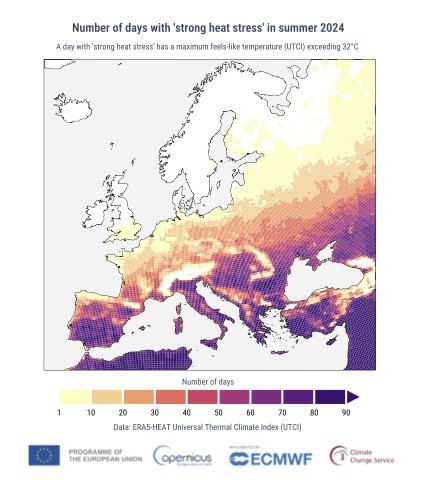
Throughout the summer months (June, July, and August) of 2024, temperatures across Europe varied significantly. While regions in northwestern Europe experienced temperatures near or even below the seasonal average, southeastern Europe faced a scorching heatwave, marking it as the hottest summer ever recorded in the region. Southeastern Europe experienced 60% more “warm daytime” hours compared to the historical average, leading to a significant increase in heat stress.

Heat stress is an important measure of how thermal environments impact human health, often quantified using the Universal Thermal Climate Index. Southeastern Europe, in particular, experienced 66 days of “strong heat stress” during the summer of 2024, which is more than double the seasonal average of 29 days. This unprecedented heat stress poses significant risks to public health, especially for vulnerable populations.
Samantha Burgess, Deputy Director of C3S, emphasized the severity of the situation, stating, “Europe saw its warmest summer on record in 2024. The extreme temperatures in regions such as southeastern Europe are impacting the well-being of Europeans, as citizens in this region are experiencing more heat stress than ever before.”
Mediterranean Sea Breaks Records
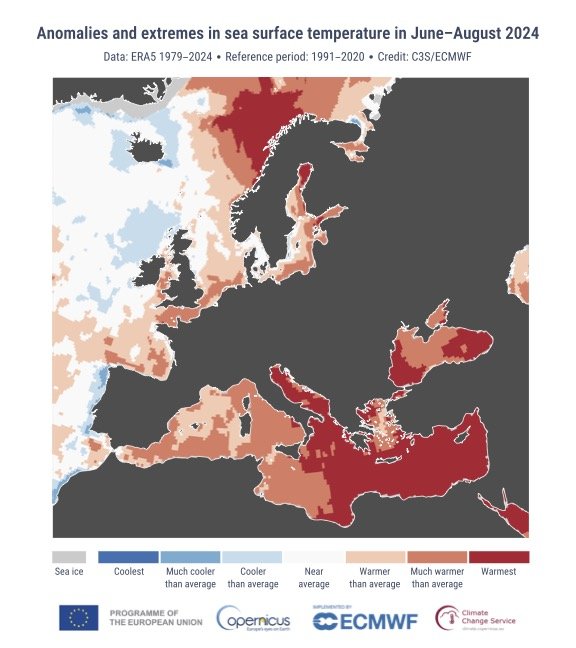
The Mediterranean Sea also set alarming records. Sea surface temperatures (SSTs) in the region reached their highest daily values ever recorded, with a peak of 28.45°C on August 13. These elevated sea temperatures contribute to severe weather events and further exacerbate the already extreme heat stress experienced by coastal populations.
Drastic Rainfall Disparities
While heat dominated southeastern Europe, rainfall patterns across the continent revealed stark contrasts. Southeastern Europe faced a significant reduction in the number of wet days, while northern regions such as the UK, Fennoscandia, and the Baltic countries saw an increase of up to 20 additional wet days compared to the average.
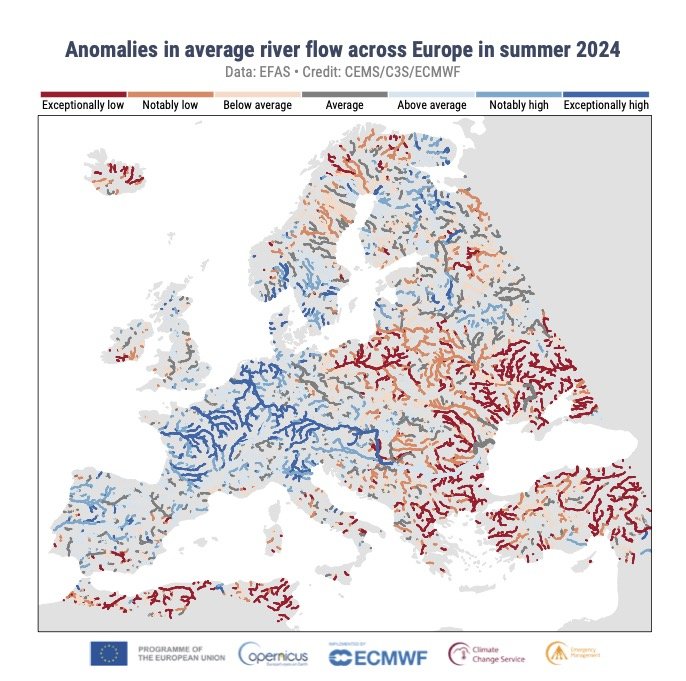

These shifts in precipitation had serious impacts on water resources. Around 35% of rivers in Europe were notably or exceptionally low, especially in the already drought-prone southeastern regions. Meanwhile, central Europe experienced unusually high river flows, highlighting the uneven distribution of water resources.
Key takeaways
The summer of 2024 stands as a powerful example of the shifting climate patterns Europe is facing. As regions like southeastern Europe endure record-breaking heat stress and dwindling water supplies, other areas are seeing increases in rainfall and river flows. This highlights the complex and uneven nature of climate change impacts across the continent. Copernicus Climate Change Service continues to monitor these changes, providing crucial insights into how Europe’s climate is evolving and the challenges it poses for the future.